Dental lab micromotors are high-load workhorses built for continuous 8-hour shifts. Unlike clinical handpieces, selecting the wrong lab equipment leads to production bottlenecks, physical fatigue, and frequent repairs. This guide identifies the technical specs and application-specific choices needed to optimize your laboratory workflow.
I. Core Technical Parameters: The "Hard Specifications"
Before looking at aesthetics, you must understand the four pillars of lab handpiece performance. These technical markers dictate whether a handpiece can survive the grinding room or if it will fail under pressure.
1.Rotation Speed (RPM)
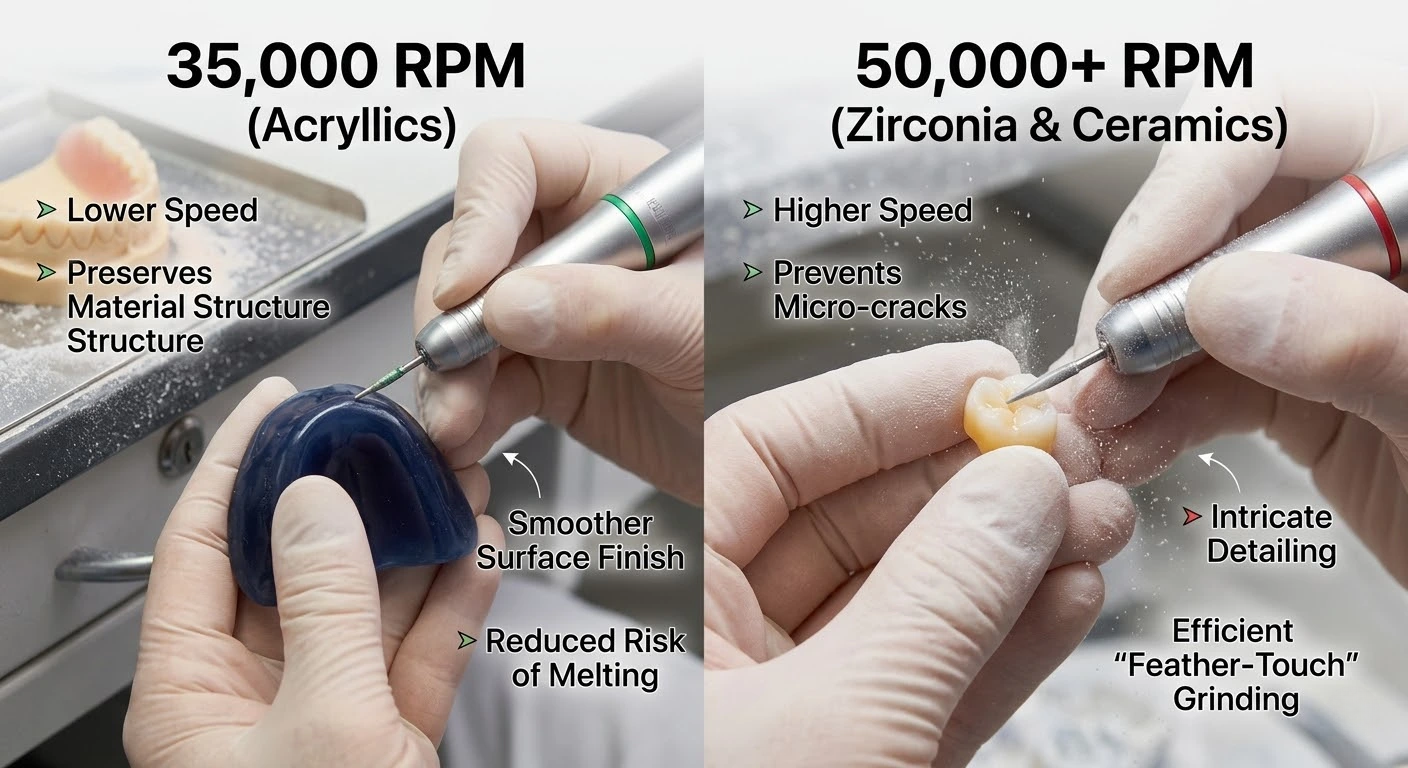
Speed isn't everything, but range is. Most lab tasks fall between 35,000 and 50,000 RPM.
- 35k RPM: Generally sufficient for acrylics and denture finishing. At this speed, you reduce the risk of melting resin materials while maintaining a smooth surface.
- 50k+ RPM: Essential for high-speed zirconia contouring and fine ceramic work. Higher speeds allow for "feather-touch" grinding, which is critical for preventing micro-cracks in brittle porcelain.
2.Torque: The True Measure of Power
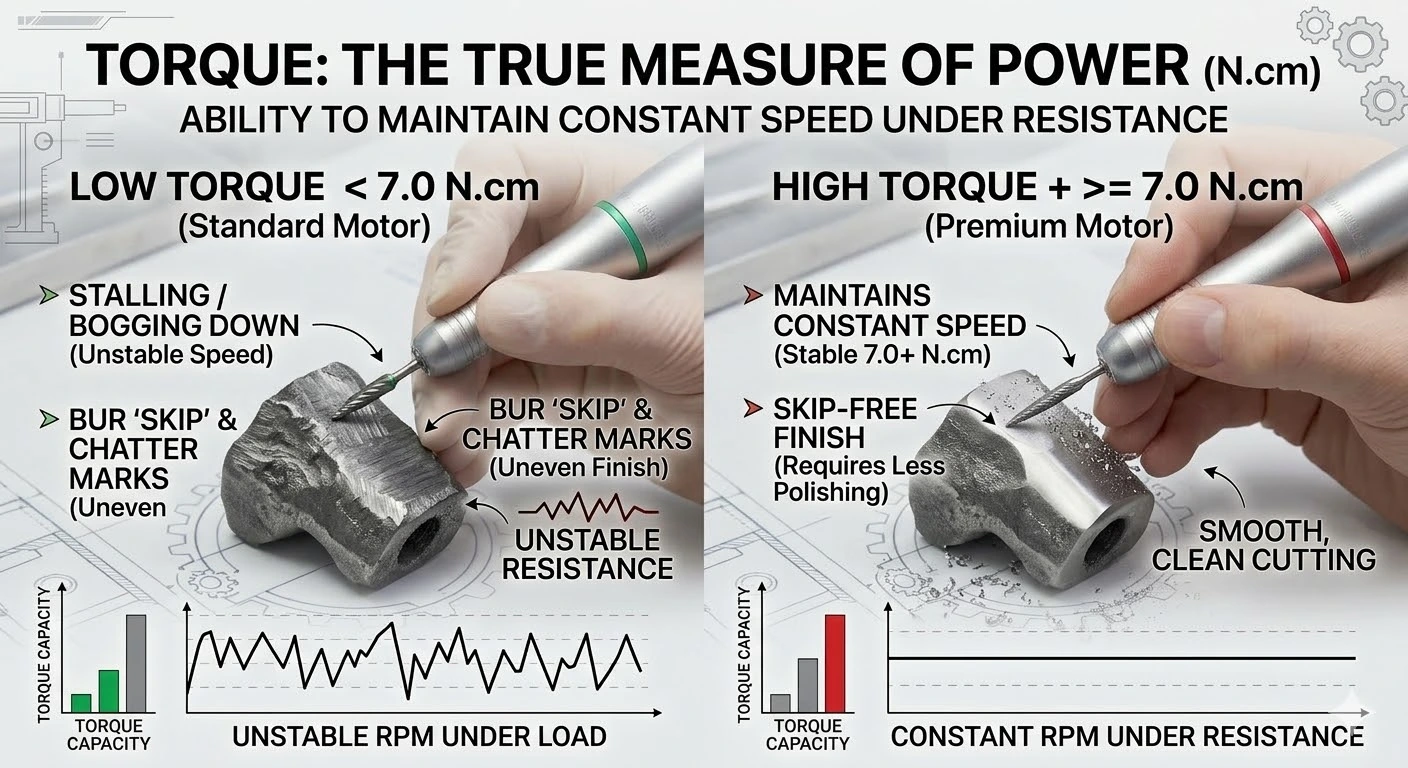
High speed is useless if the motor bogs down the moment it touches the material. Torque (measured in N.cm) represents the motor's ability to maintain a constant speed under resistance.
- For heavy metal grinding (Cobalt-Chrome or Non-precious alloys), look for a torque of 7.0 N.cm or higher.
- High torque ensures that the bur doesn't "skip" or stall, providing a skip-free finish that requires less manual polishing later.
3.Coaxiality and Radial Runout
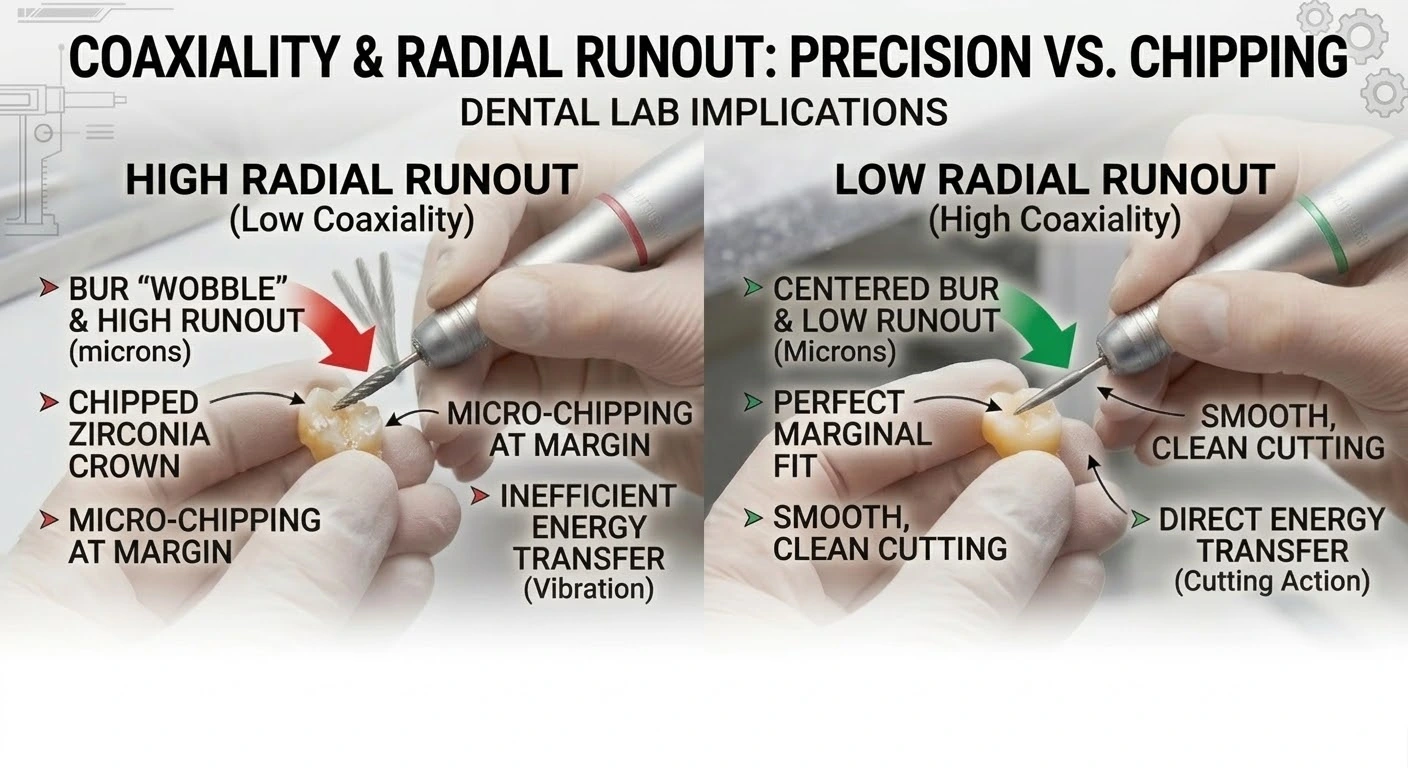
If your bur "wobbles" even slightly, you are looking at high radial runout. In dental labs, low runout (coaxiality) is the difference between a perfect margin and a chipped zirconia crown.
- Precision handpieces keep the bur centered within microns.
- The Result: The energy is transferred directly into the cutting action rather than into vibration, which preserves both the material and the handpiece bearings.
4. Noise and Vibration
Chronic exposure to high-frequency vibration leads to "white finger" syndrome and carpal tunnel.
- A high-quality micromotor should be whisper-quiet (typically below 60dB).
- Low vibration isn't just about comfort; it allows for more precise control during delicate carving and detailing, protecting the technician’s long-term occupational health.
II. Motor Type Comparison: Brushed vs. Brushless
The shift toward brushless technology is the biggest trend in dental lab equipment. By eliminating the friction of physical brushes, these motors stay cooler and last significantly longer.
| Features |
Brushed Motor |
Brushless Motor |
Lab Efficiency Analysis |
| Speed (RPM) |
1,000 - 35,000 |
1,000 - 60,000+ |
Supports finer zirconia & ceramic engraving. |
| Torque |
Medium (Stalls under load) |
Very High (Constant) |
30% faster metal grinding efficiency. |
| Noise/Vibration |
Noticeable |
Ultra-Quiet |
Improves the environment; protects hearing. |
| Maintenance |
Change carbon brushes |
Maintenance-Free |
Eliminates downtime and brush dust. |
| Total Cost (TCO) |
Low upfront cost |
Best Long-term Value |
Fewer repairs and longer motor life. |
III. Application-Oriented Purchasing Guide
Different lab departments have distinct technical requirements. Instead of a one-size-fits-all approach, we recommend matching your specific machining tasks with these professional RHJC series solutions:
1. High-Precision Zirconia & Ceramic Work
For fine engraving and ceramic contouring, precision and speed control are non-negotiable.
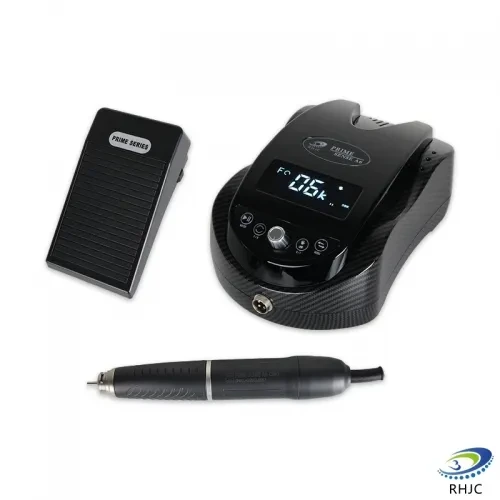
- Recommended Product: Prime SENSE A6 (55,000 RPM)
- Why it works: This new model is engineered with an extremely high coaxiality to prevent micro-chipping. It features a unique 3-speed preset function (Low/Med/High), allowing technicians to switch instantly between different bur requirements without manual dial adjustments, significantly boosting workflow efficiency.
2. Heavy-Duty Metal & Alloy Cutting
Cutting through Cobalt-Chrome or titanium requires raw power and thermal stability to prevent the motor from stalling.
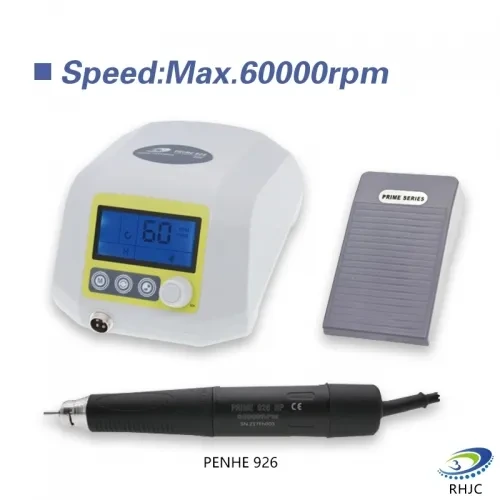
- Recommended Product: Prime 926 (60,000 RPM)
- Why it works: Known as the "Heavy-Duty" workhorse, the Prime 926 delivers a massive 9.2 N.cm of torque and 250W output. It maintains constant speed even under extreme pressure, making it the top choice for labs specializing in metal frameworks and non-precious alloys.
3. The All-Rounder for Everyday Lab Tasks
Most labs need a versatile station that can handle everything from stone models to final contouring.
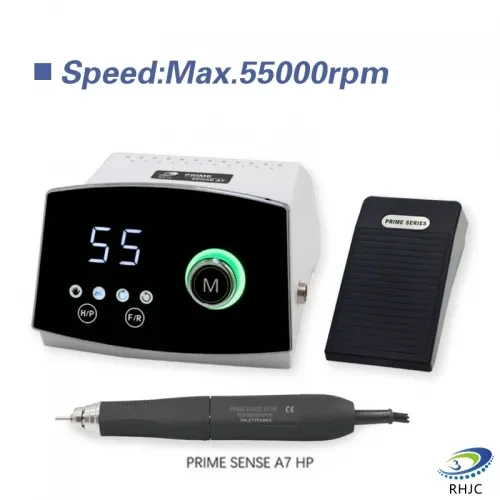
- Recommended Product: SENSE A7 (55,000 RPM)
- Why it works: The A7 is the perfect balance of modern technology and reliability. With its 8.5 N.cm brushless motor and a lightweight handpiece (only 204g), it provides a digital-first experience that reduces hand fatigue while maintaining professional-grade precision for 8-hour shifts.
4. Routine Resin Sanding & Denture Finishing
For acrylic work and basic trimming, you need a reliable, cost-effective tool that is easy to operate.
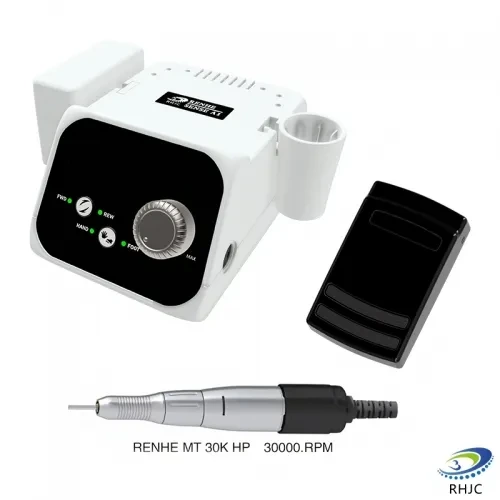
- Recommended Product: RENHE SENSE A1b (35,000 RPM)
- Why it works: This is the ultimate "best value" option. It features an intuitive digital speed display and essential safety features like overload protection and a fault prompt function, ensuring even entry-level technicians can work safely and effectively.
5. Mobile Repairs & Temporary Workstations
When you need to perform quick adjustments chairside or at a satellite station without a power outlet.
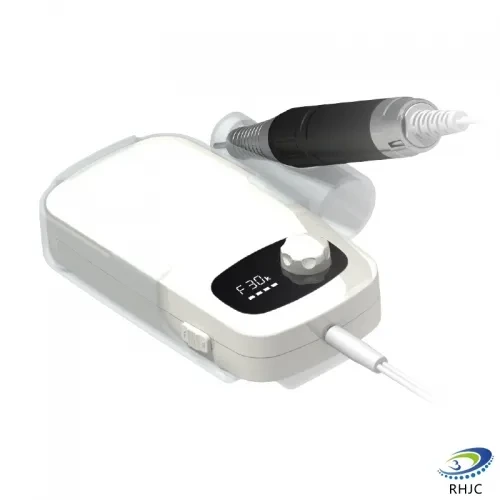
- Recommended Product: RENHE 1226 (30,000 RPM)
- Why it works: This portable DC micromotor is designed for ultimate freedom. A quick 2-hour charge provides over 10 hours of continuous operation, making it indispensable for mobile clinics or small technician nooks where space is at a premium.
IV. Ergonomics and Operability: The User Experience
A handpiece can have great specs, but if it feels like a brick, your technicians won't use it effectively. Operability is about how the machine interacts with the human hand.
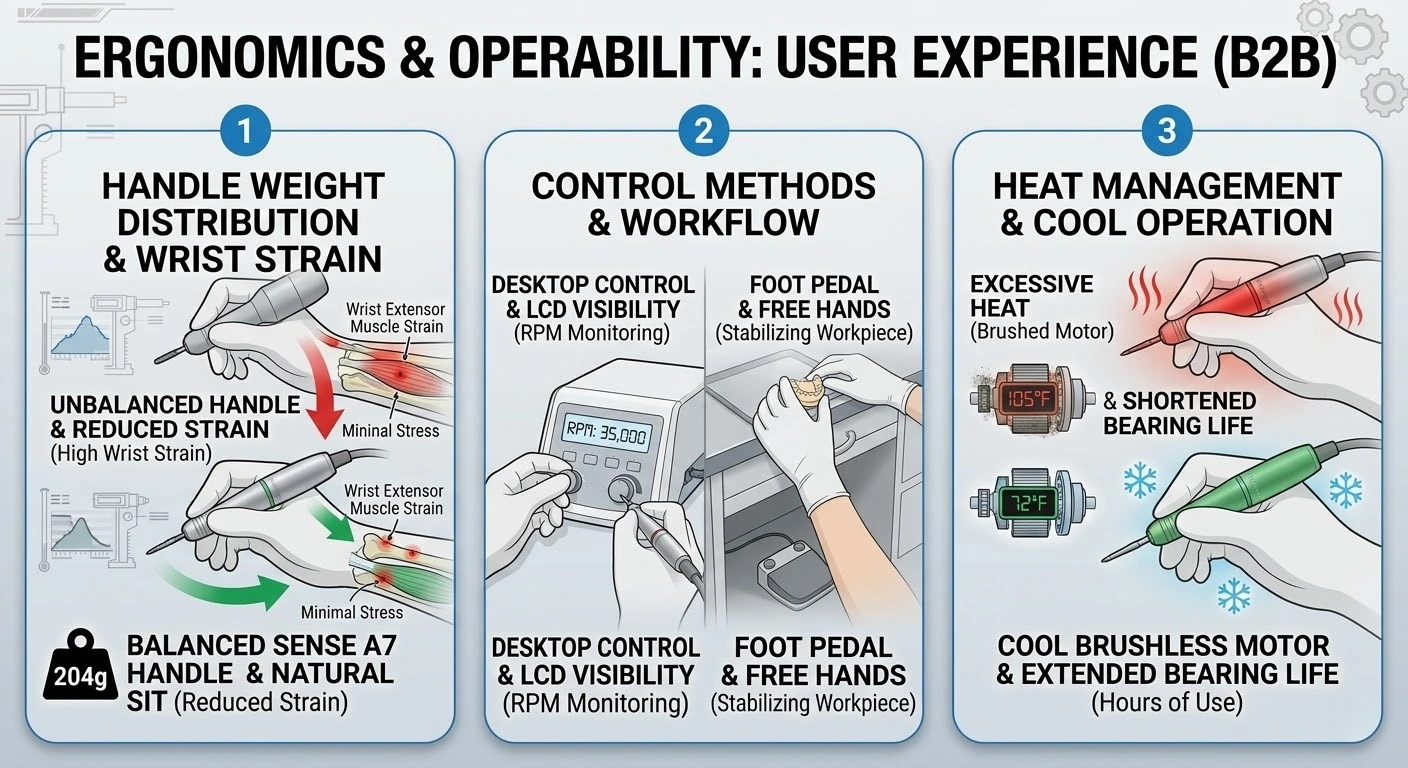
- Handle Weight Distribution: A balanced handpiece prevents the back-end from "dragging" on the wrist. The SENSE A7 handle, weighing only 204g, is designed to sit naturally in the hand, significantly reducing wrist strain during long shifts.
- Control Methods: Consider your bench layout. Desktop control boxes offer clear LCD visibility for precise RPM monitoring. Many labs prefer foot pedals or knee controls to keep hands free for stabilizing the workpiece.
- Heat Management: Efficient brushless motors stay cool even after hours of use. Excessive heat is a sign of internal friction; if a handpiece gets hot to the touch, it is likely nearing bearing failure.
V. Maintenance: Protecting Your Investment
The "hidden cost" of any dental handpiece is how much time it spends in the repair shop. Proactive maintenance starts with the right design features.
- Dustproof Construction: Lab environments are full of abrasive gypsum and metal dust. Opt for units with sealed bearings and dust-shielded handpieces to prevent internal contamination that grinds down gears.
- Self-Diagnosis: Modern units like the Prime 926 feature error code displays. This allows technicians to identify issues—such as an unseated bur, a cable disconnect, or an overload—instantly, without sending the unit for unnecessary repairs.
- Bearing Quality: High-end models often utilize ceramic bearings. These offer lower friction and 1.5x the life expectancy of traditional steel bearings, making them a smarter investment for high-volume labs.
Conclusion
In the dental lab industry, precision is non-negotiable, and your equipment should be, too. Choosing between the affordability of brushed motors and the high-performance longevity of the Prime SENSE or Prime 926 series depends on your production goals. However, for labs looking to eliminate downtime and maximize technician comfort, brushless technology is the clear winner.
Don't let equipment bottlenecks slow down your workflow. Visit the RHJC Official to find the micromotor that fits your specific needs. From specialized B2B bulk pricing to seamless international logistics, we ensure your lab is always equipped for excellence.